


Treatment and solution for ingrown toenails
Professional treatment and solution for ingrown toenails. Painless, risk-free, and with visible results from the first session. Regain smoothness and comfort while walking.
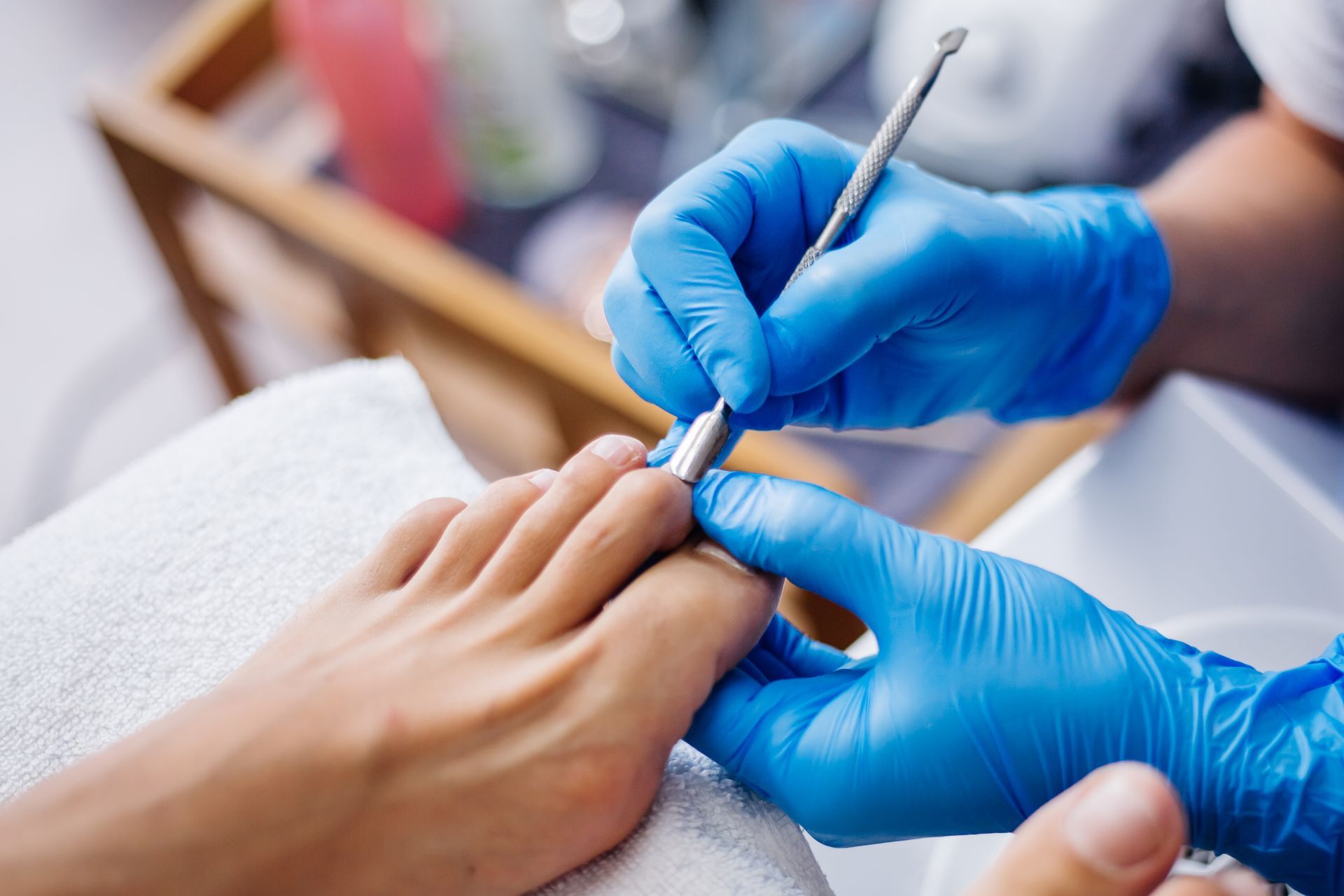
Treatment and solution for (onychocryptosis) ingrown toenails

Ingrown toenails (onychocryptosis) are a nail condition in which the edge of the nail grows into the surrounding tissue, causing pain, inflammation, and even infection. Treatment in a podiatry clinic involves precise, safe techniques focused on eliminating the underlying cause of the problem.
1. Specialized clinical assessment
Before any intervention, a complete analysis is carried out:
- Degree of onychocryptosis (mild, moderate or severe)
- Presence of infection (erythema, exudate, granuloma)
- Nail type (curvature, thickness, deformity)
- Triggering factors (incorrect cut, footwear, pressure)
This allows for choosing the appropriate treatment and preventing recurrences.
2. Nail decompression technique
The edge of the embedded nail is released:
- The nail spike is carefully removed
- Pressure on the inflamed tissue is reduced
- Work is being carried out only on the affected area.
Immediate result: significant reduction in pain
3. Removal of the spicule (encrusted segment)
When there is deeper penetration:
- The fragment of nail that is causing the injury is removed.
- The nail groove is cleaned
- This avoids leaving behind residues that could cause recurrence.
4. Management of inflamed tissue
Depending on the case:
- Disinfection of the area
- Reduction of inflammation
- Management of hypertrophic tissue or granuloma (if present)
5. Protection and correction
After the procedure:
- Application of protective dressings
- Use of orthonyxia (in recurrent cases) to correct nail curvature
- Home care instructions
6. Education and prevention
A key part of the treatment's success:
- Correct nail cutting technique
- Recommendation for appropriate footwear
- Humidity and pressure control
- Clinical follow-up if necessary
Important considerations
- Minimally invasive and generally painless procedure
- It is performed with sterile instruments.
- In patients with diabetes mellitus or vascular problems, it requires stricter control.
- In severe or recurrent cases, additional medical-surgical management may be required.
